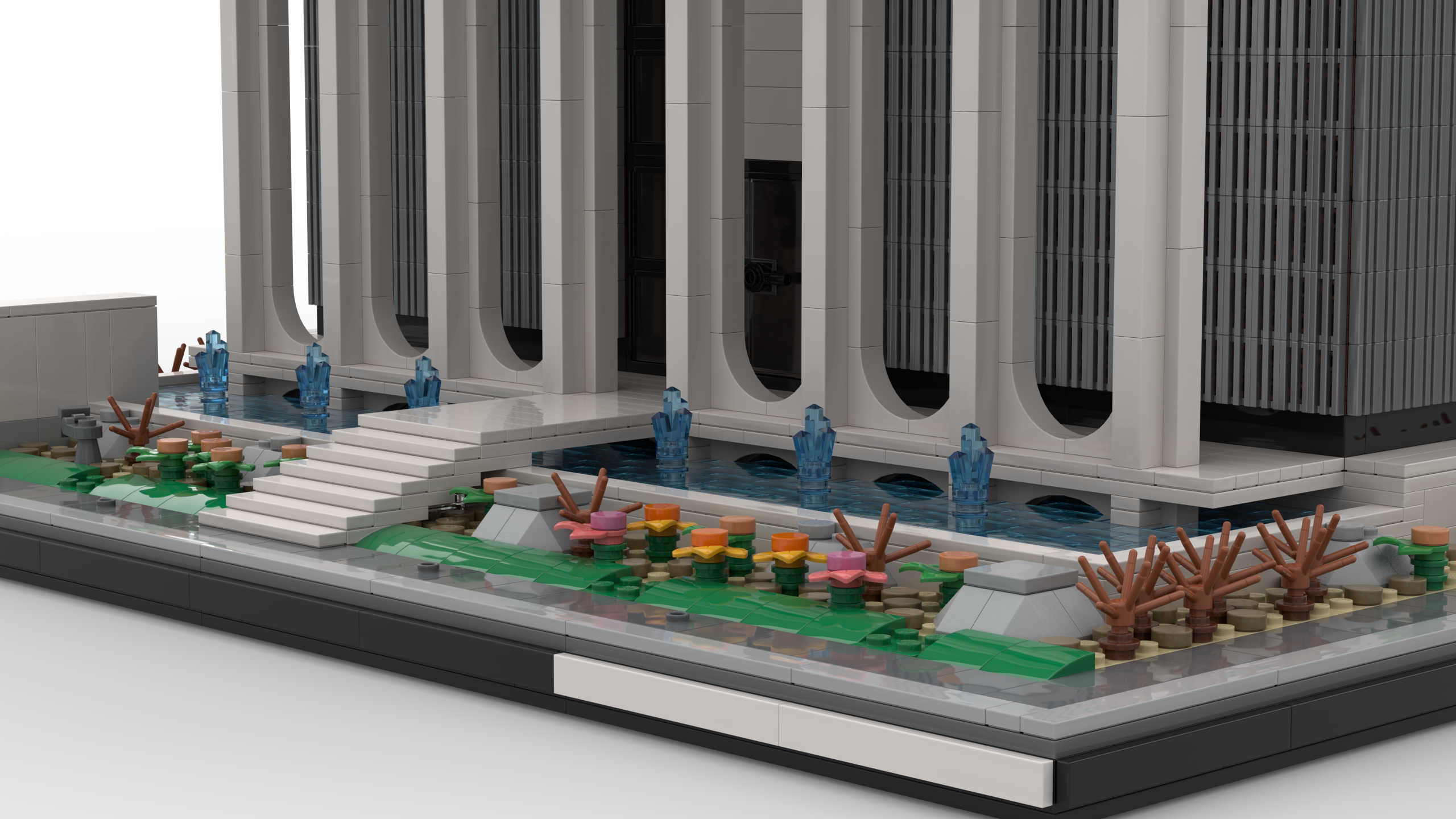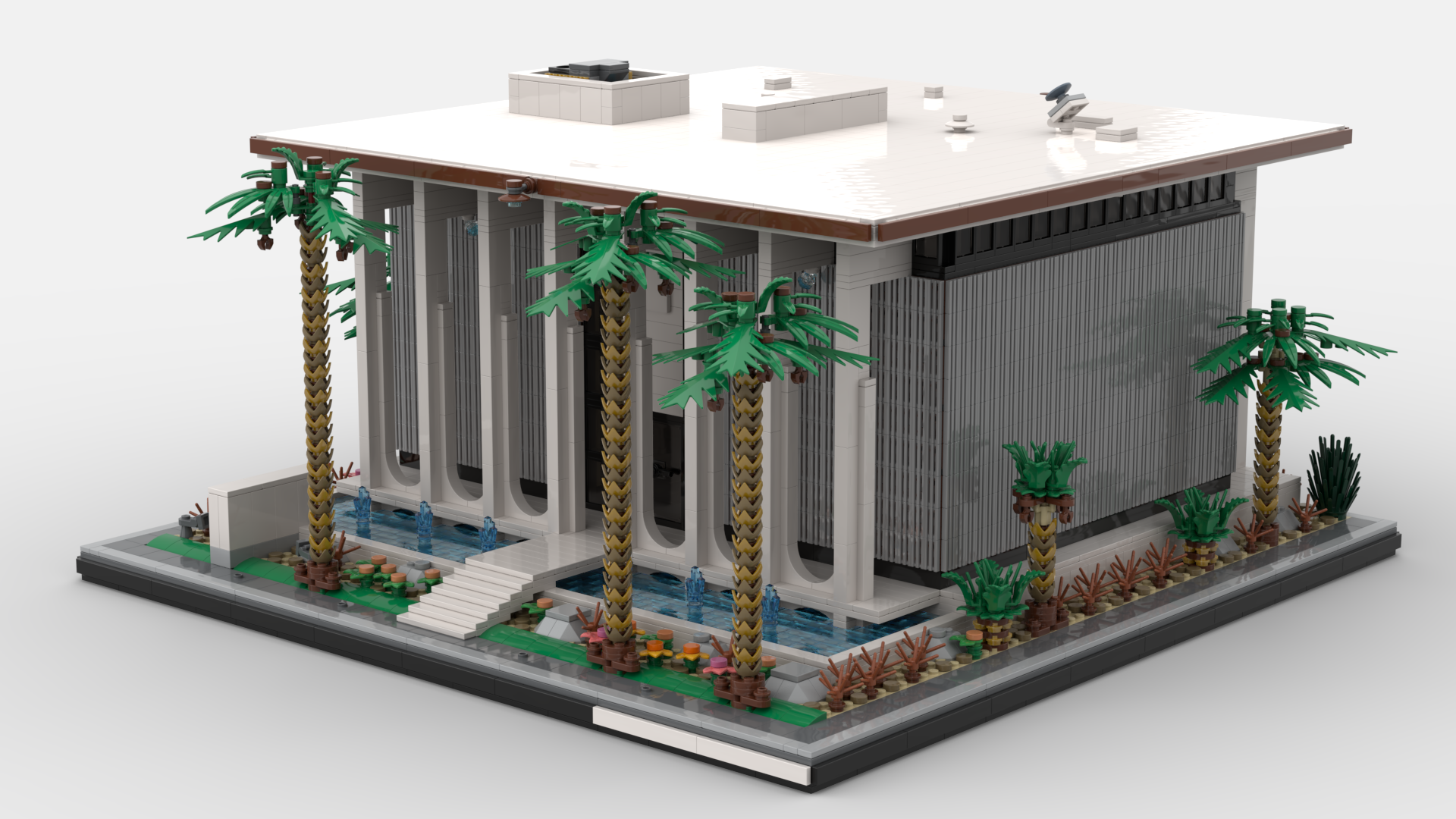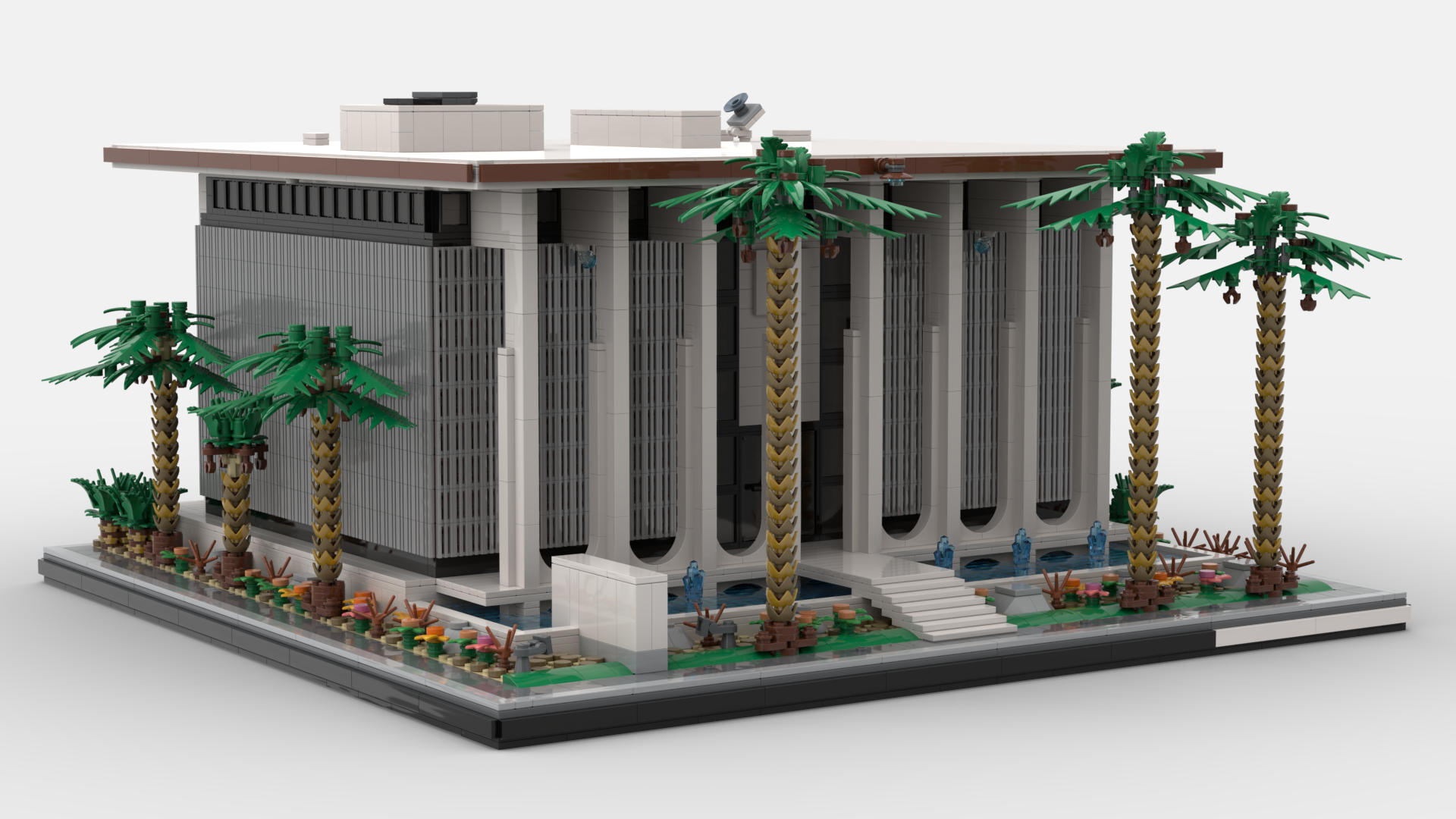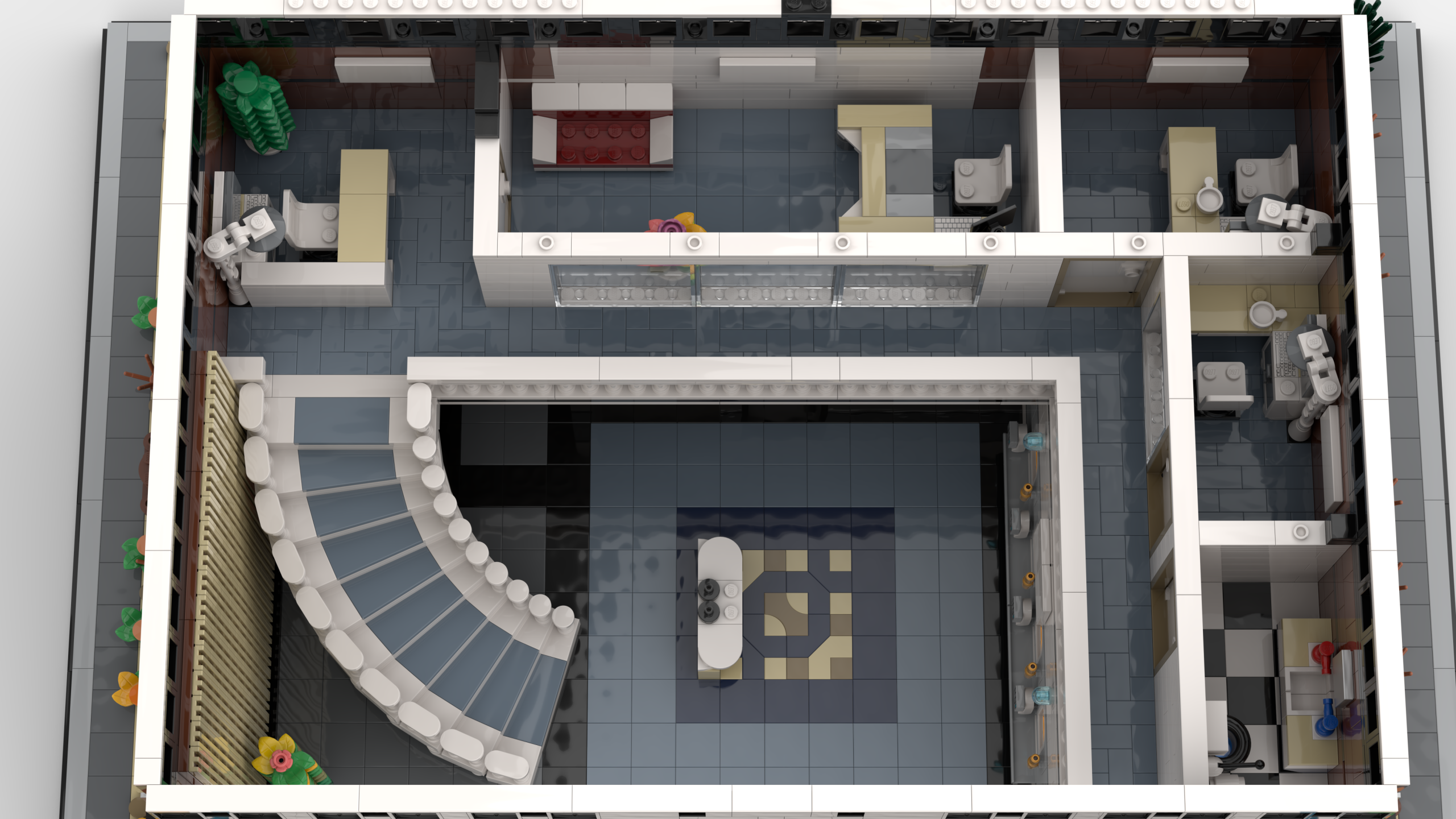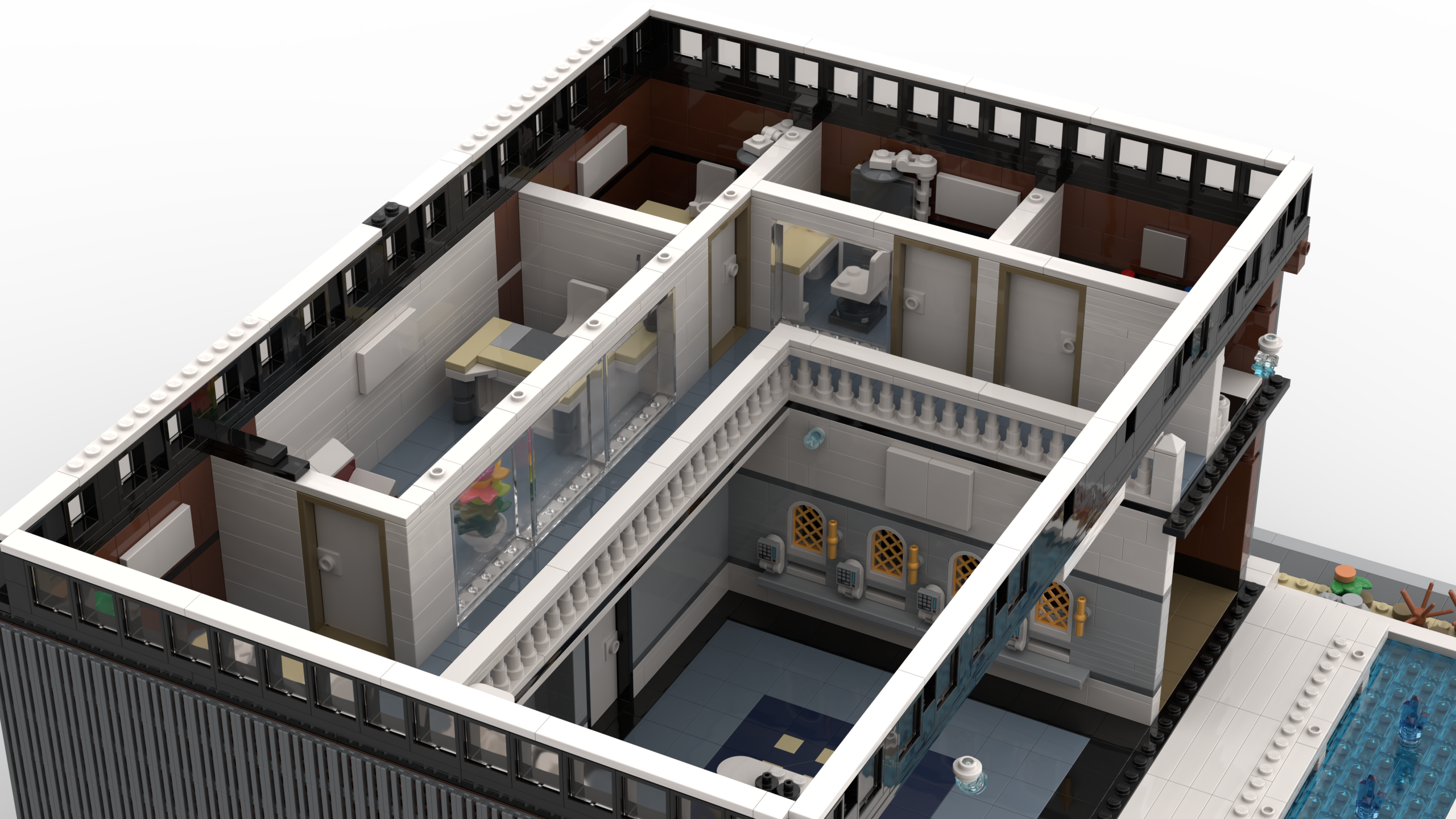
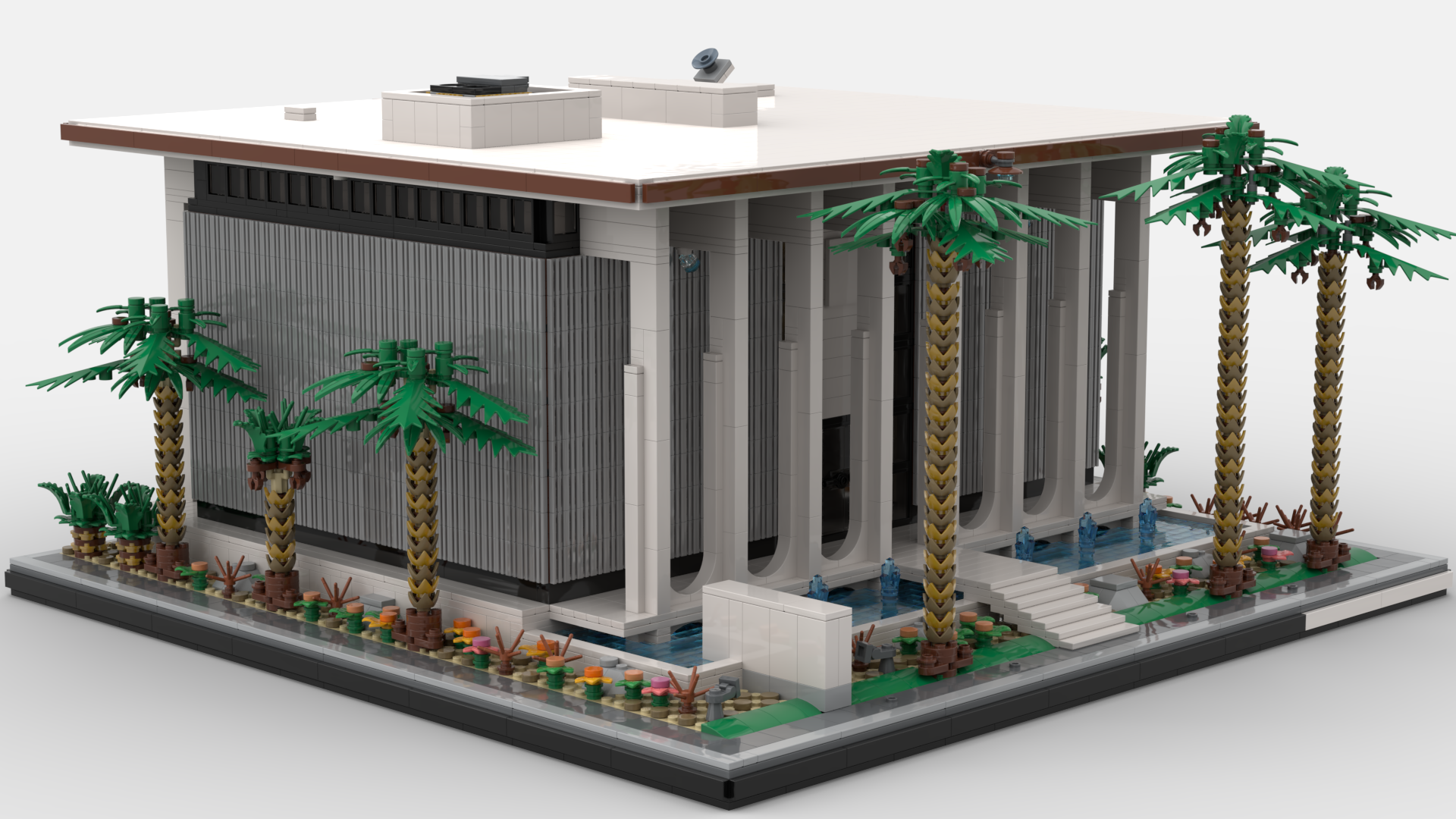
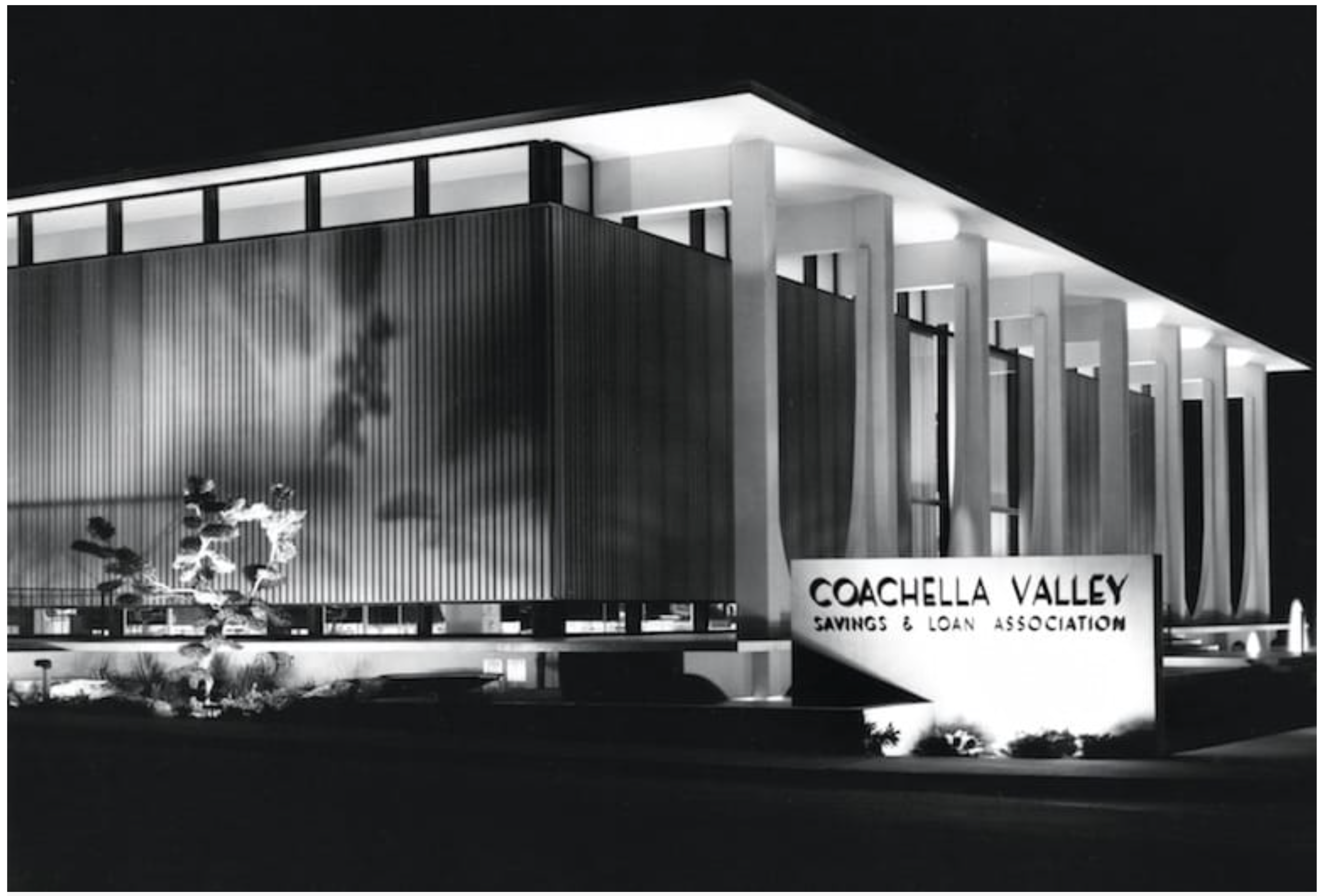
The former Coachella Valley Savings and Loan #2 building in Palm Springs is a notable example of mid-century commercial architecture in the city’s postwar boom years. Constructed in 1959, the branch was developed during a period when financial institutions in Palm Springs embraced bold, modern design to project optimism, stability, and progress. Today, the building continues its banking legacy as a Chase Bank, with much of its original form still legible despite later updates.
The building is generally attributed to architect E. Stewart Williams, one of Palm Springs’ most influential modernists. Williams was responsible for a wide range of civic, commercial, and residential projects in the Coachella Valley, and he became especially well known for redefining how banks and public institutions could look in the desert. Rather than relying on traditional classical motifs, Williams favored clean lines, expressive roof forms, and climate-responsive design – an approach that helped shape Palm Springs’ international reputation for mid-century modern architecture.
Architecturally, the former savings and loan branch reflects Mid-Century Modern / Desert Modern principles. Key features include a low, horizontal profile; strong roof planes; deep overhangs for shade; and an emphasis on transparency that symbolized openness and trust. Materials were selected to suit the desert environment, with careful attention to light, shadow, and indoor-outdoor relationships. Like many Palm Springs banks of the era, the building balanced civic presence with an inviting, almost residential scale.
Historically, Coachella Valley Savings and Loan played an important role in financing the region’s rapid mid-century growth, supporting housing developments, businesses, and tourism infrastructure as Palm Springs expanded into a national destination. The continued use of the building as a bank underscores both the durability of its original design and the foresight of its architect. Even with modern branding and interior changes, the structure remains a tangible link to the era when Palm Springs’ financial institutions helped define the city’s distinctive modern identity.
[Image Carousel – click image to view zoom]