
Journal:  The Plaza Theatre

Statistics
Number of Pieces Unique Brick Types Number of Lights Mass (Pounds) Size (Inches) [LxWxH]
54204 1375 188 164.5 81 x 28.4 x 22.0
Estimated Cost to Build
Bricks Lighting Supplies Display
$9600 $2150 $ 375 $ TBD *

* Dependent on public art acceptance, installation location, display type, and other factors.  Values can range from $500 to >$3000.

Funding
Phase 1 - Build and Lighting Phase 2 - Public Display
$12,125 Not Activated Yet

Journal:  The Plaza Theatre

Statistics

Number of Pieces:  54204

Unique Brick Types:  1375

Number of Lights:  118

Mass (pounds): 164.5

Size (inches LxWxH): 81 x 28.4 x 22.0

Estimated Cost to Build

Bricks:  $9600

Lighting:  $2150

Supplies:  $ 375

Display:  $ TBD *

Funding

Phase 1 – Build & Lighting:  $12,125

Phase 2 – Public Display:  Not Activated Yet

* Dependent on public art acceptance, installation location, display type, and other factors.  Values can range from $500 to >$3000.

[Click image for zoom details]
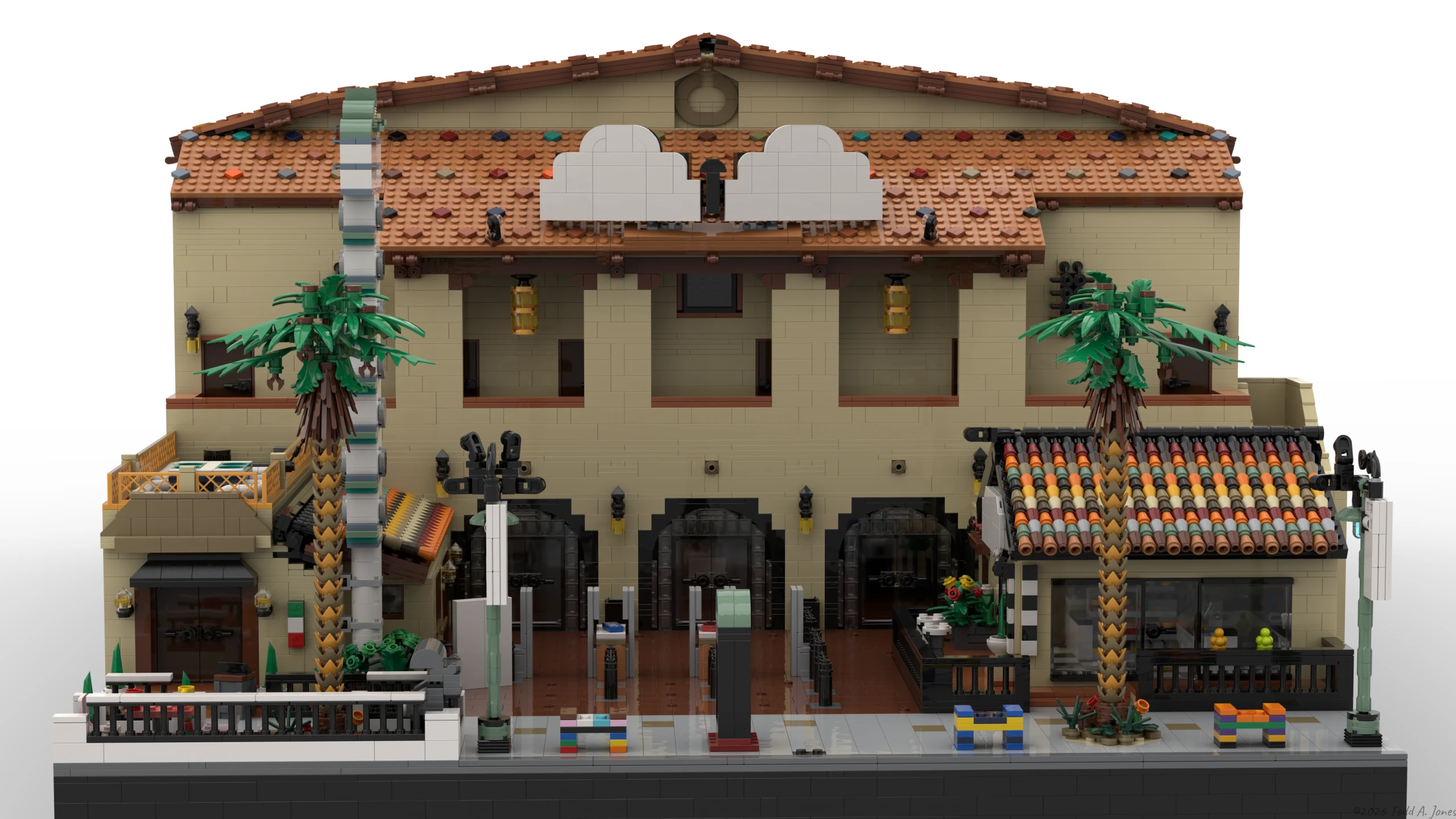
The Plaza Theatre at 128 S. Palm Canyon Drive is among the oldest and most iconic buildings in Palm Springs, opened in late 1936 as the region’s first true movie palace. It was commissioned by Julia Shaw Patterson Carnell — a Dayton, Ohio, philanthropist and heiress to the National Cash Register fortune — who envisioned Palm Springs as a cultural destination, not merely a desert retreat. Carnell funded construction as part of the larger La Plaza mixed-use complex, one of the country’s earliest integrated commercial and entertainment developments. On opening night, the theatre hosted the world premiere of Camille, drawing Hollywood luminaries including Robert Taylor, Barbara Stanwyck, Tyrone Power, and Shirley Temple — with rumors that Greta Garbo herself slipped in to watch, incognito.

The Plaza was designed by Los Angeles firm Schenck & Williams in the “atmospheric” style, a theatrical design genre that transformed an interior auditorium into a simulated outdoor environment. The auditorium’s side walls were sculpted to evoke a faux-Spanish village, complete with arched doorways, carved facades, and decorative detailing drawn from Spanish Colonial Revival traditions. The vast ceiling was engineered to transition slowly from twilight to a deep blue night sky filled with twinkling stars — giving audiences the sensation of watching a performance under the open desert sky. An open courtyard lobby at the front of the building, practical only in Southern California’s mild climate, created a visible gathering buzz from the street, drawing passersby into the spectacle before the curtain even rose.

The building’s technical ambition extended well beyond its visual design. As early as 1937, the theatre installed headset earphones in the rear rows for hearing-impaired patrons — a rare and forward-thinking accommodation for the era. In 1941, Jack Benny broadcast live coast-to-coast on NBC Radio from the Plaza’s stage, giving the small desert city a moment of national prominence. A cycloramic curved screen was added in 1949, keeping the venue at the forefront of cinematic presentation. Decades later, from 1991 to 2014, the Plaza found a second life as home to The Fabulous Palm Springs Follies, a beloved vaudeville-style revue featuring performers aged 55 and older that drew devoted audiences from across the country.

The $34 million restoration, completed in December 2025 and led by the Palm Springs Plaza Theatre Foundation with Architectural Resources Group as executive architect, returned the building to its 1936 character while equipping it for modern performance. The atmospheric ceiling’s twilight-to-starfield lighting effect was fully preserved, and the original proscenium and period stenciling were uncovered and restored. Seven hundred new seats and an expanded stage now share space with a lobby bar, upgraded dressing rooms, and museum displays celebrating the building’s history. The technology package — an L-Acoustics line array sound system, 4K laser projection, a 28-foot screen, and a hearing loop — ensures the Plaza can host everything from world-class touring acts to local nonprofits, all within one of Palm Springs’ most beloved and enduring downtown landmarks.
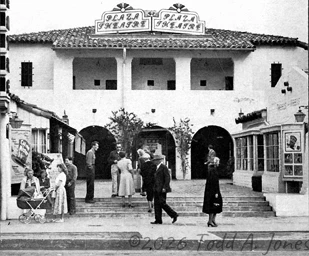
Schenck & Williams was a Los Angeles-based architectural firm active in the 1920s and 1930s, working at the height of the “atmospheric” theatre movement — a design genre that transformed enclosed auditoriums into immersive outdoor environments. Their work on the Plaza Theatre reflected both the technical ambition and cultural optimism of the era, blending Spanish Colonial Revival decorative traditions with the theatrical spectacle the atmospheric style demanded. While the firm did not achieve the broad name recognition of some mid-century contemporaries, the Plaza Theatre stands as a well-preserved and fully documented example of their craft, and one of the finest surviving atmospheric theatres in Southern California.

  • The model features a condensed version of the La Plaza courtyard, including the Italian eatery, the local toffee maker, the theatre’s iconic vertical sign, and street-level details such as decorative lamp posts, artisan-painted benches, and Walk of Fame stars embedded in the sidewalk.

  • The building’s exterior reflects the newly enclosed lobby, the balcony walkway above, the roofline signage, and the Spanish Colonial Revival architectural detailing that defines the theatre’s street presence along Palm Canyon Drive.

  • The lobby section recreates the remodeled interior, including the original iron gates, box office, decorative overhead beams, period-appropriate lamps, and the newly added lobby bar — a nod to the Plaza’s reinvention as a full-service performance destination.

  • The theatre auditorium reflects the current seating layout beneath a curved balcony, with the atmospheric Spanish village side walls, twinkling overhead lighting, and the projection booth and new electronics bays tucked into their proper positions within the house.

  • The stage section captures the active performance space, including an onstage restroom and dressing room, a rear LED screen, and the main movie screen — while the basement below contains the full dressing room suite and the theatre manager’s office beneath the stage.

  • The side panel of the model folds down to reveal a full cross-section of the theatre’s interior, offering an unobstructed view from the outside in. Two lighting modes are included — a bright display setting for daytime viewing and a show-lights setting that recreates the atmosphere of an evening performance.

[Image Carousel – click image to view zoom]

Share This Story, Choose Your Platform!