Journal:  Coachella Valley Savings and Loan #2

Statistics
Number of Pieces Unique Brick Types Number of Lights Mass (Pounds) Size (Inches) [LxWxH]
9763 461 42 19.96 28.8 x 25.3 x 10.5
Estimated Cost to Build
Bricks Lighting Supplies Display
$2100 $ 510 $ 250 $ TBD *

* Dependent on public art acceptance, installation location, display type, and other factors.  Values can range from $500 to >$3000.

Funding
Phase 1 - Build and Lighting Phase 2 - Public Display
$2860 Not Activated Yet

Journal:  Coachella Valley Savings and Loan #2

Statistics

Number of Pieces:  9763

Unique Brick Types:  461

Number of Lights:  42

Mass (pounds): 19.96

Size (inches LxWxH): 8.8 x 25.3 x 10.5

Estimated Cost to Build

Bricks:  $2100

Lighting:  $ 510

Supplies:  $ 250

Display:  $ TBD *

Funding

Phase 1 – Build & Lighting:  $2860

Phase 2 – Public Display:  Not Activated Yet

* Dependent on public art acceptance, installation location, display type, and other factors.  Values can range from $500 to >$3000.

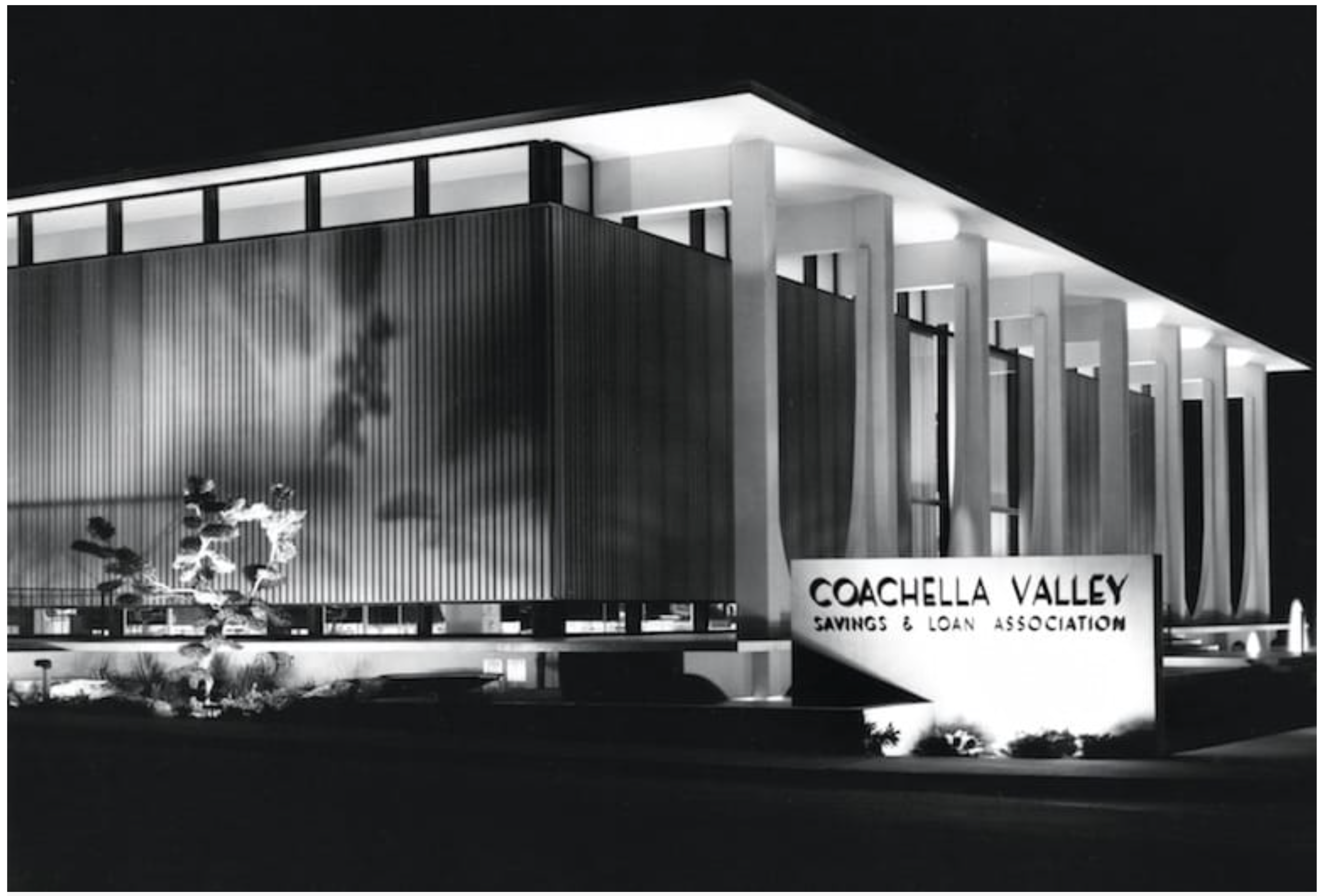
The former Coachella Valley Savings and Loan #2 building in Palm Springs is a notable example of mid-century commercial architecture in the city’s postwar boom years. Constructed in 1959, the branch was developed during a period when financial institutions in Palm Springs embraced bold, modern design to project optimism, stability, and progress. Today, the building continues its banking legacy as a Chase Bank, with much of its original form still legible despite later updates.

The building is generally attributed to architect E. Stewart Williams, one of Palm Springs’ most influential modernists. Williams was responsible for a wide range of civic, commercial, and residential projects in the Coachella Valley, and he became especially well known for redefining how banks and public institutions could look in the desert. Rather than relying on traditional classical motifs, Williams favored clean lines, expressive roof forms, and climate-responsive design – an approach that helped shape Palm Springs’ international reputation for mid-century modern architecture.

Architecturally, the former savings and loan branch reflects Mid-Century Modern / Desert Modern principles. Key features include a low, horizontal profile; strong roof planes; deep overhangs for shade; and an emphasis on transparency that symbolized openness and trust. Materials were selected to suit the desert environment, with careful attention to light, shadow, and indoor-outdoor relationships. Like many Palm Springs banks of the era, the building balanced civic presence with an inviting, almost residential scale.

Historically, Coachella Valley Savings and Loan played an important role in financing the region’s rapid mid-century growth, supporting housing developments, businesses, and tourism infrastructure as Palm Springs expanded into a national destination. The continued use of the building as a bank underscores both the durability of its original design and the foresight of its architect. Even with modern branding and interior changes, the structure remains a tangible link to the era when Palm Springs’ financial institutions helped define the city’s distinctive modern identity.
Stewart Williams (1909–2001) was one of the most influential architects shaping the modern identity of Palm Springs and the broader Coachella Valley during the mid-20th century. After relocating from Los Angeles to Palm Springs in the late 1940s, Williams became the city’s leading designer of civic, commercial, and institutional buildings, helping translate International Style modernism into a form uniquely suited to the desert climate. His work emphasized strong horizontal lines, expressive roof forms, deep overhangs for shade, extensive use of glass, and a careful balance between monumentality and human scale.

Williams is particularly noted for redefining the architecture of banks, schools, and public buildings – structures that traditionally relied on classical symbolism – by presenting them instead as open, forward-looking, and technologically confident. His projects often combined architectural clarity with environmental responsiveness, using light, shadow, and orientation as design tools. Beyond his commercial work, Williams also designed numerous custom homes that helped establish Palm Springs as a global center for Desert Modernism.

Through decades of practice, E. Stewart Williams left a legacy that still defines Palm Springs’ architectural character. His buildings remain widely admired for their elegance, restraint, and optimism, and many continue to serve their original functions today. More than any single architect, Williams helped demonstrate how modern architecture could express civic identity, regional climate, and postwar progress all at once.

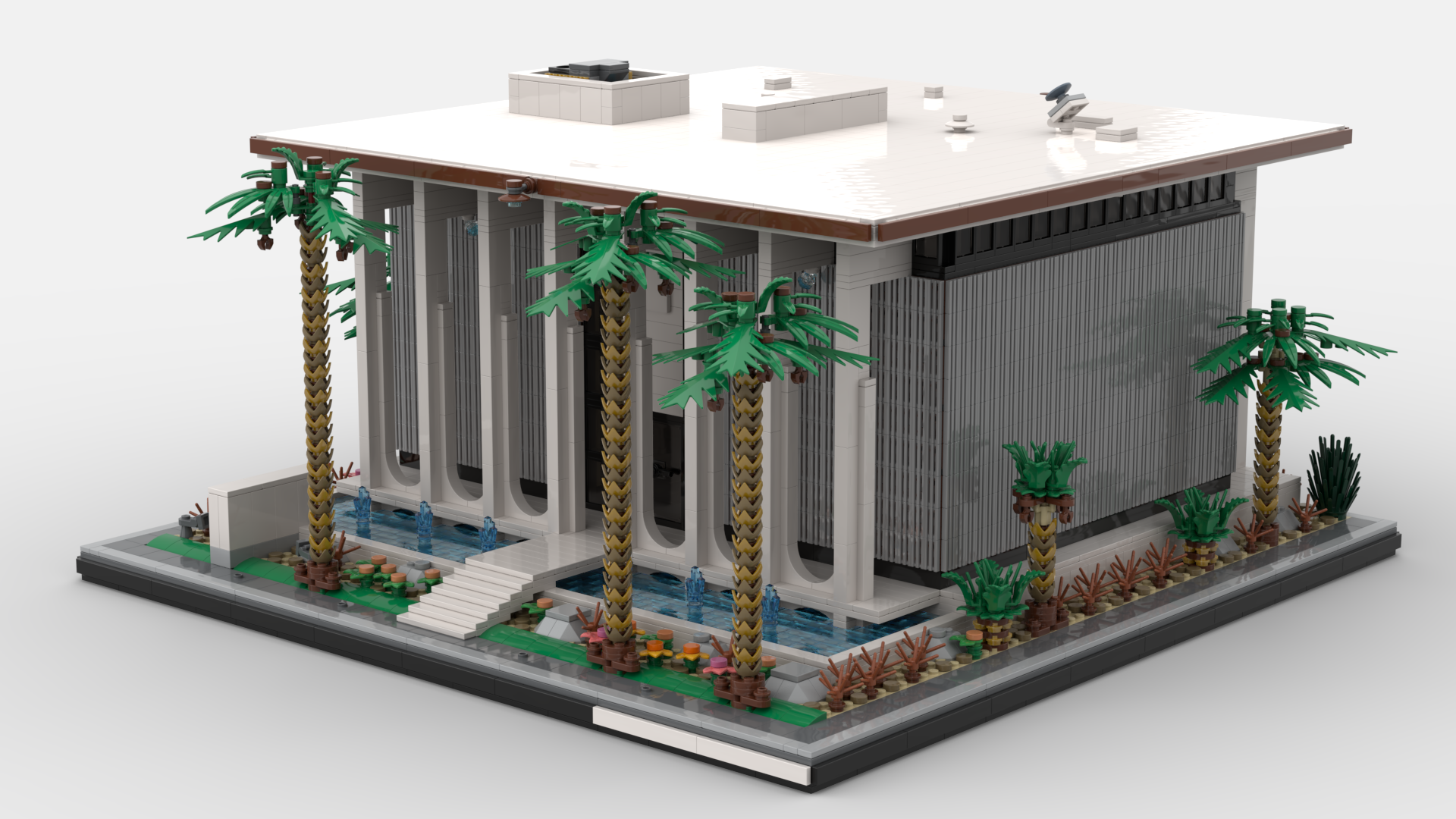
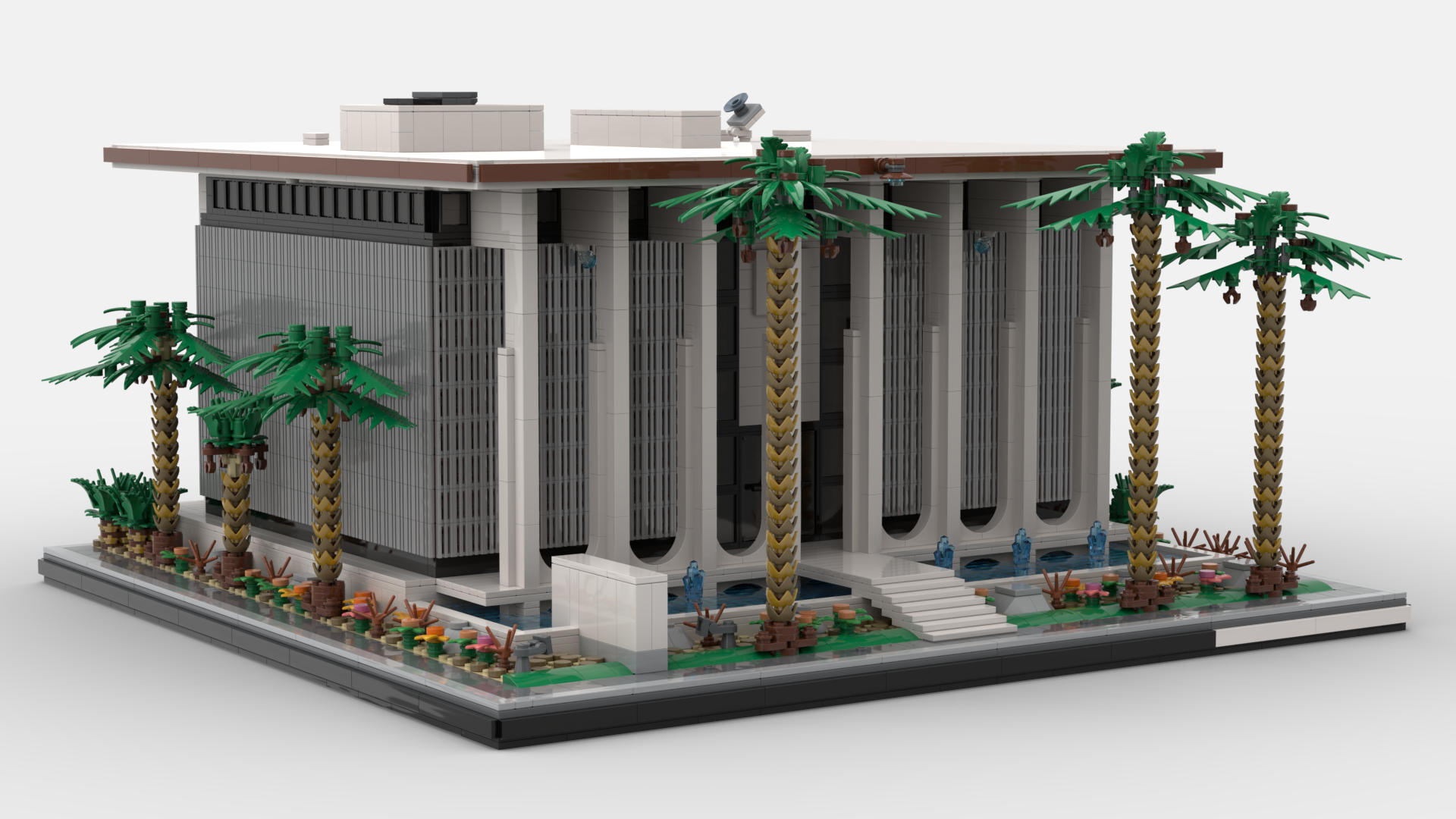
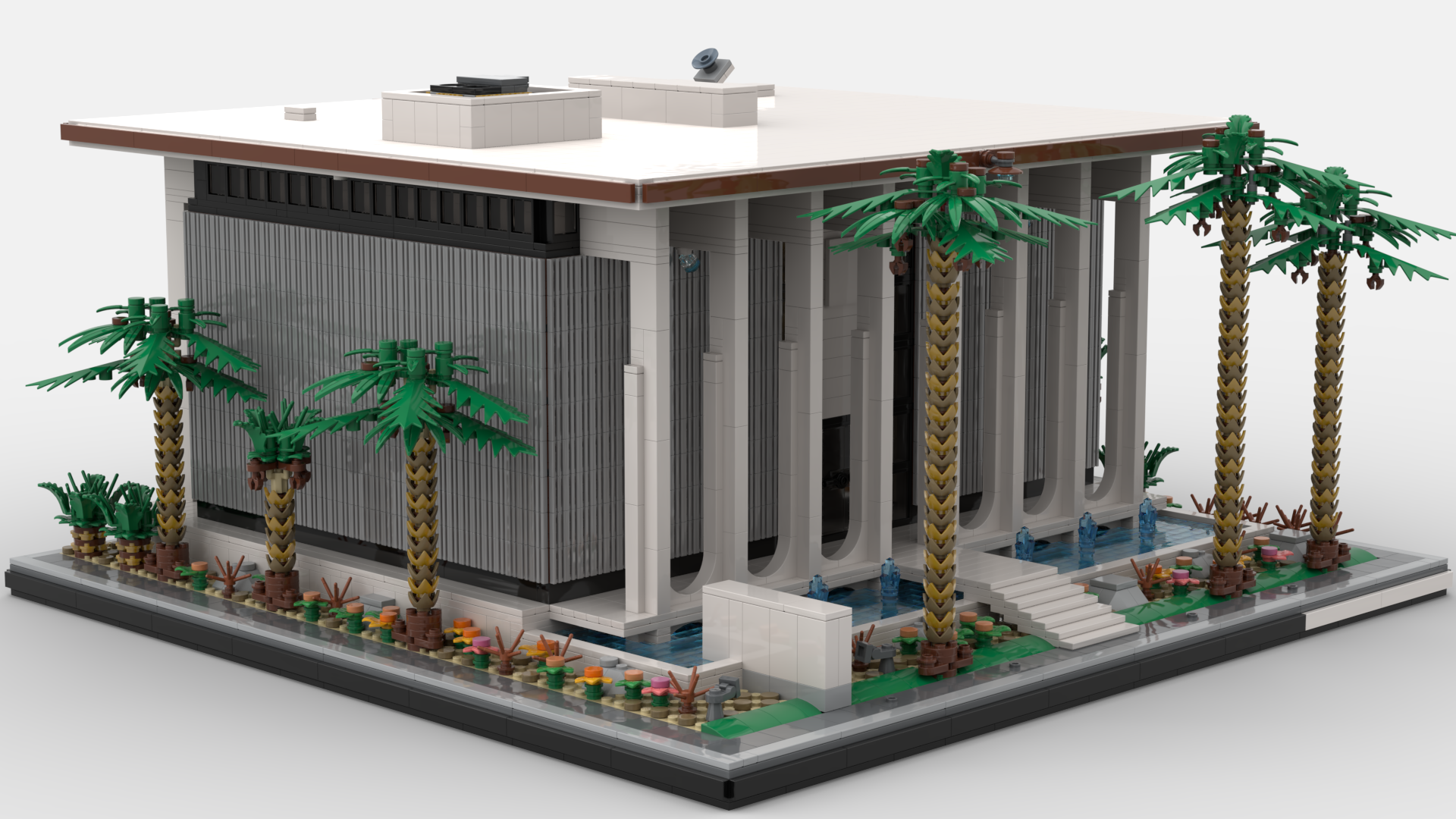
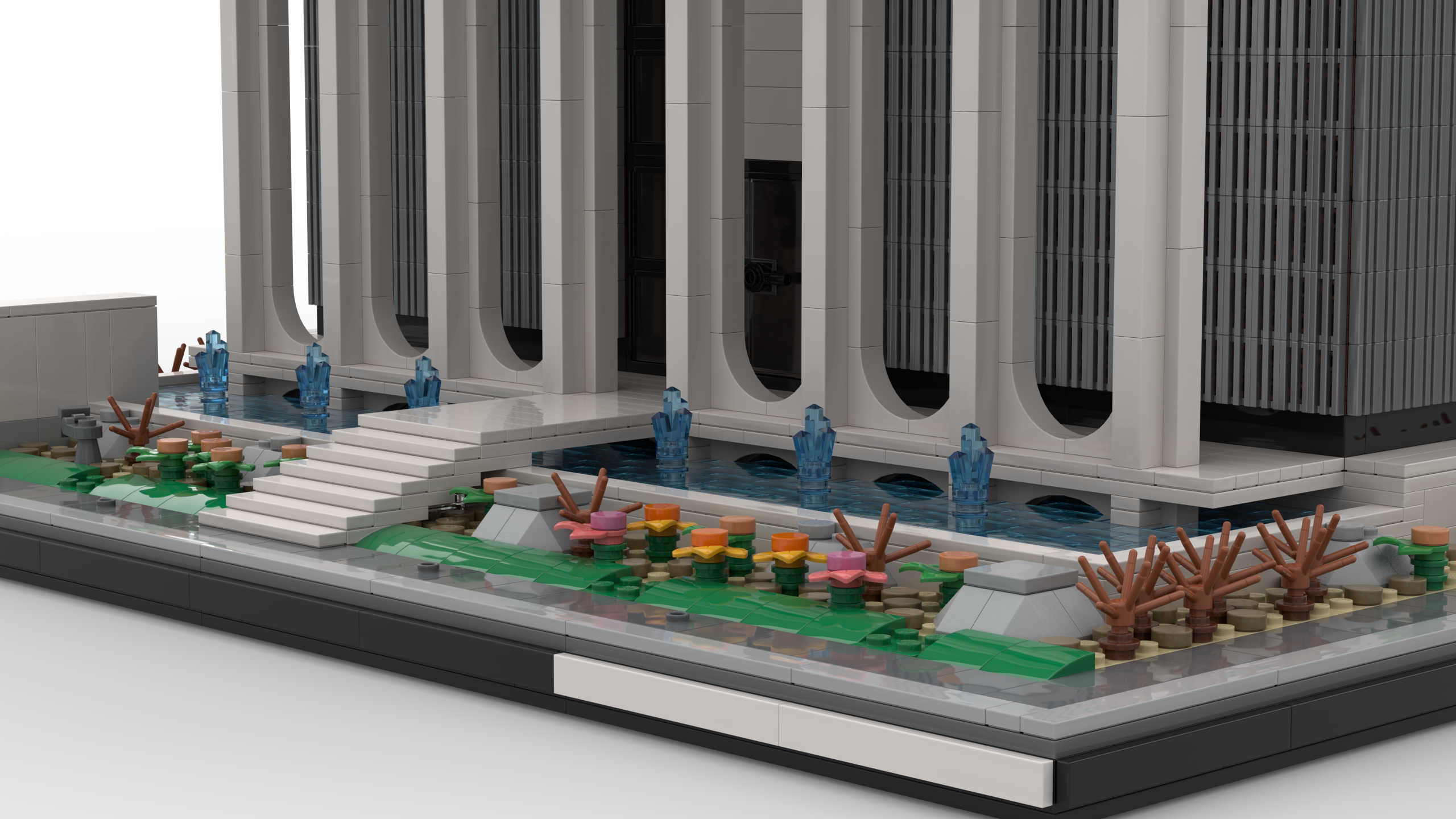
  • This brick interpretation of the Valley Savings and Loan #2 captures the building’s key elements, including the flat roof, deep overhangs, metal slotted exterior, inverted arches, and front fountains.

  • The first floor and roofline windows are also faithfully included, along with surrounding landscaping.

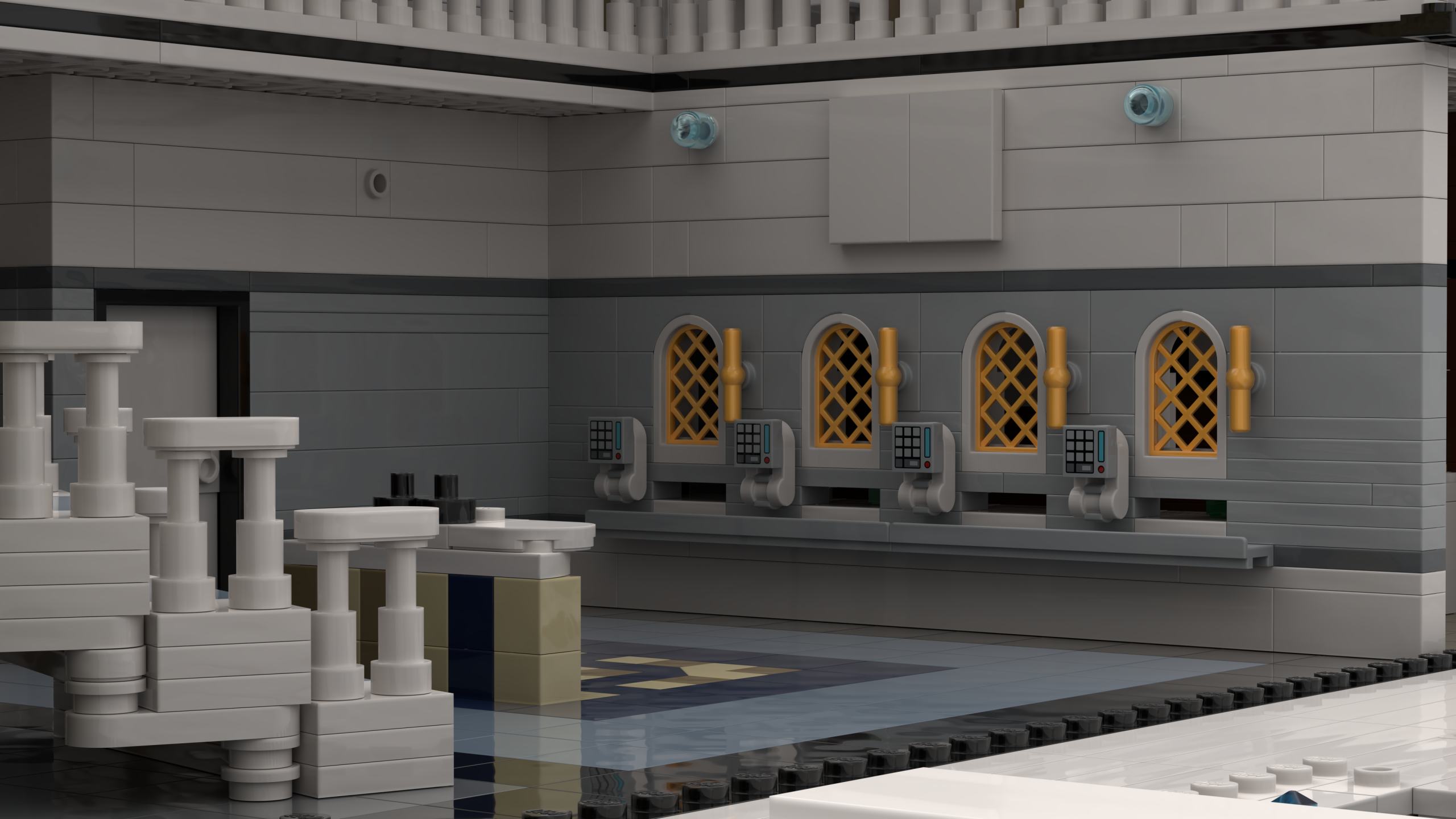
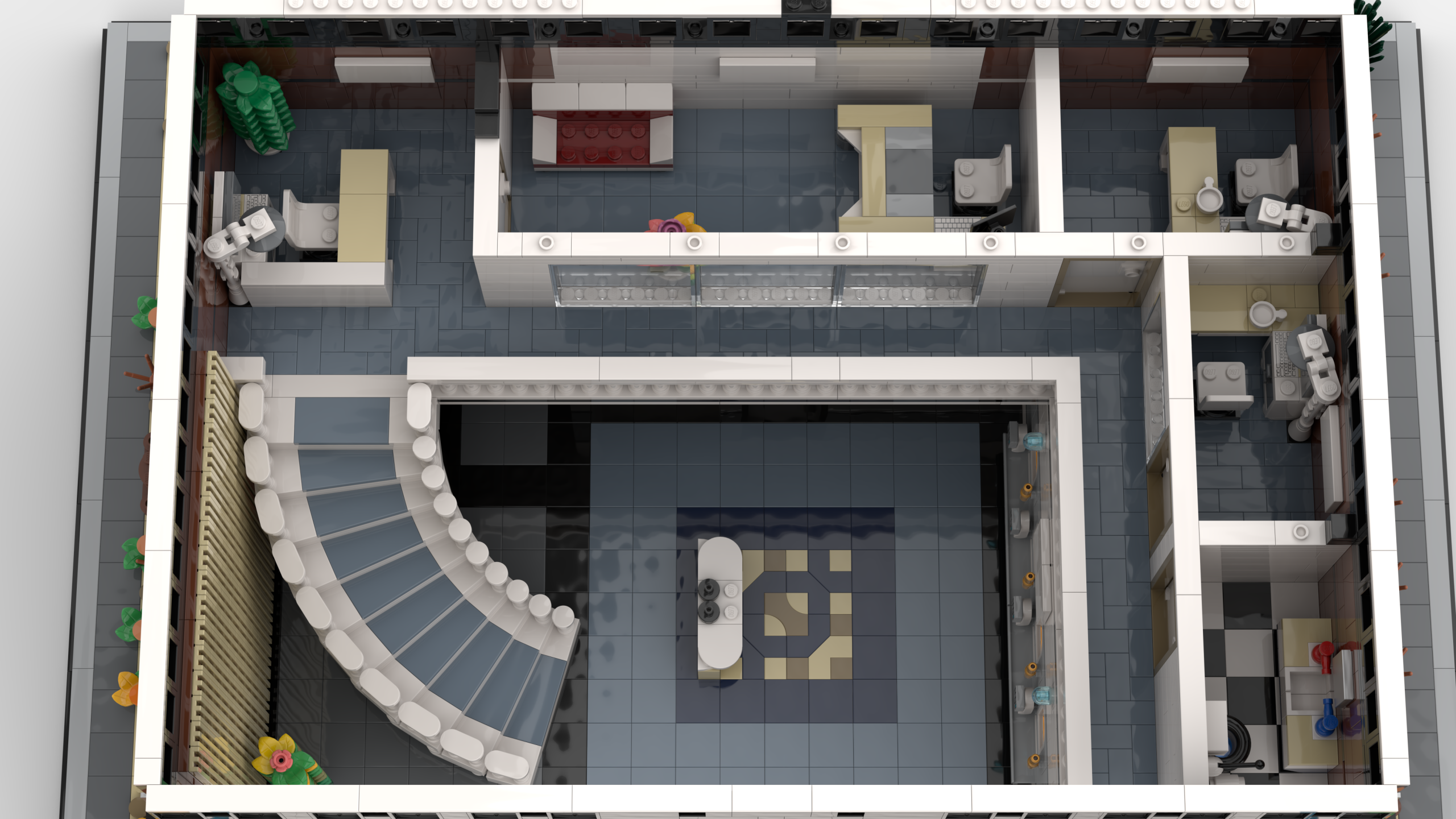
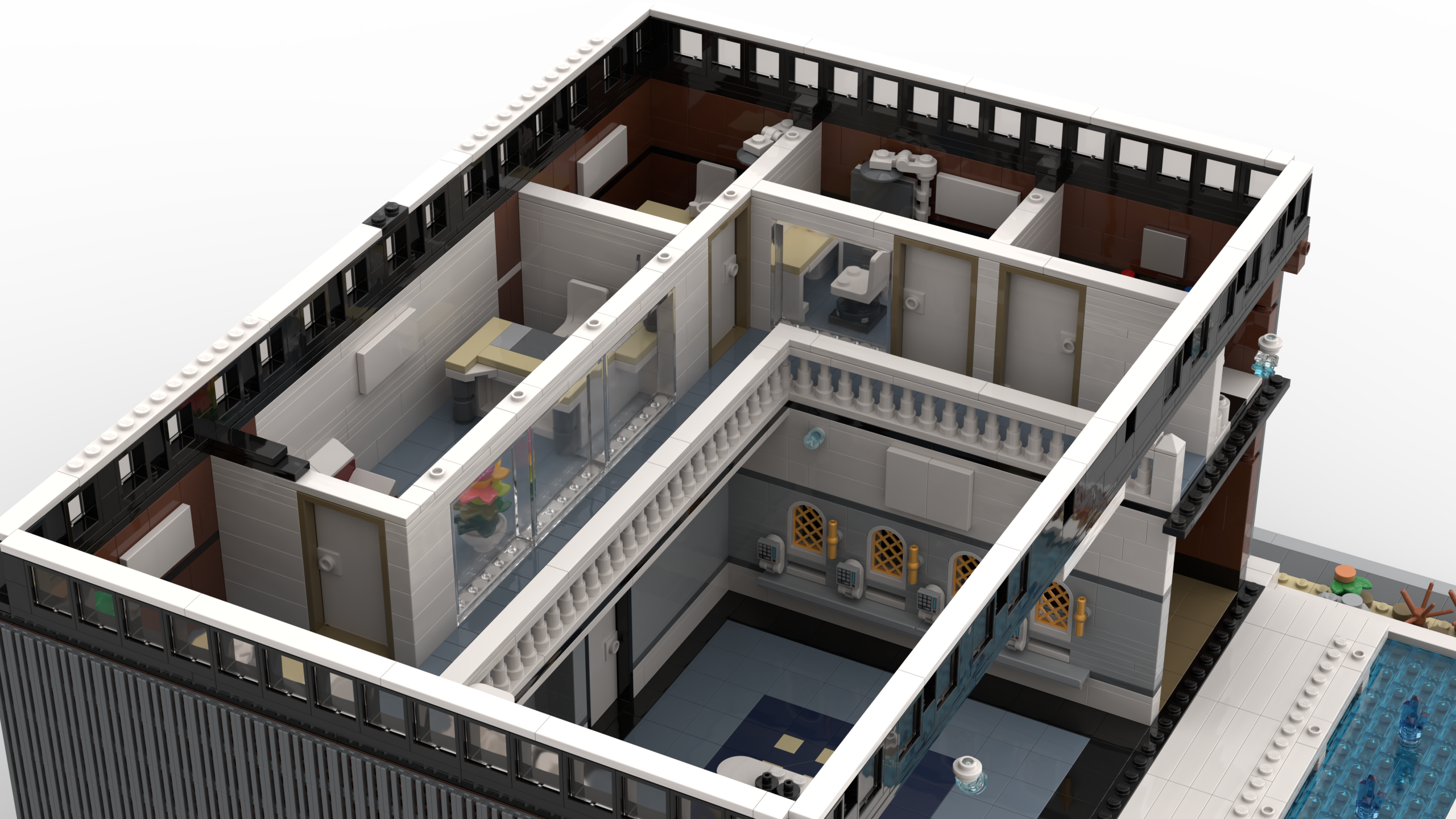
  • Inside, the design features expected bank elements like teller stations, a cash vault, safe deposit boxes, and a conference room, with offices located on the second floor. The spacious lobby showcases interior wood slats, mirroring the building’s exterior.

  • I’ve reimagined the semi-circular staircase originally part of the design, though removed during later remodels.

  • Note: This design excludes the basement and parking garage.

[Image Carousel – click image to view zoom]
Share This Story, Choose Your Platform!