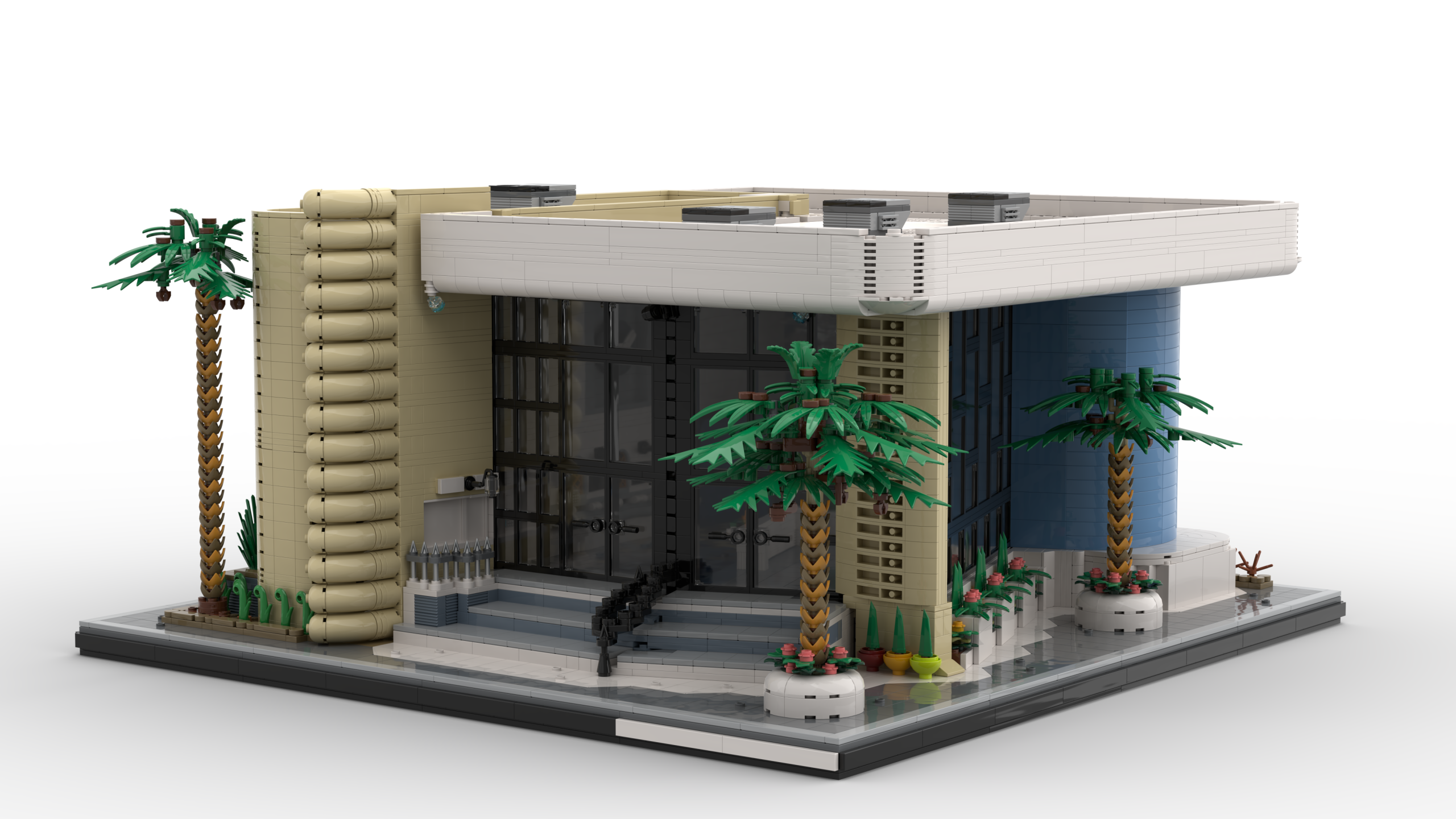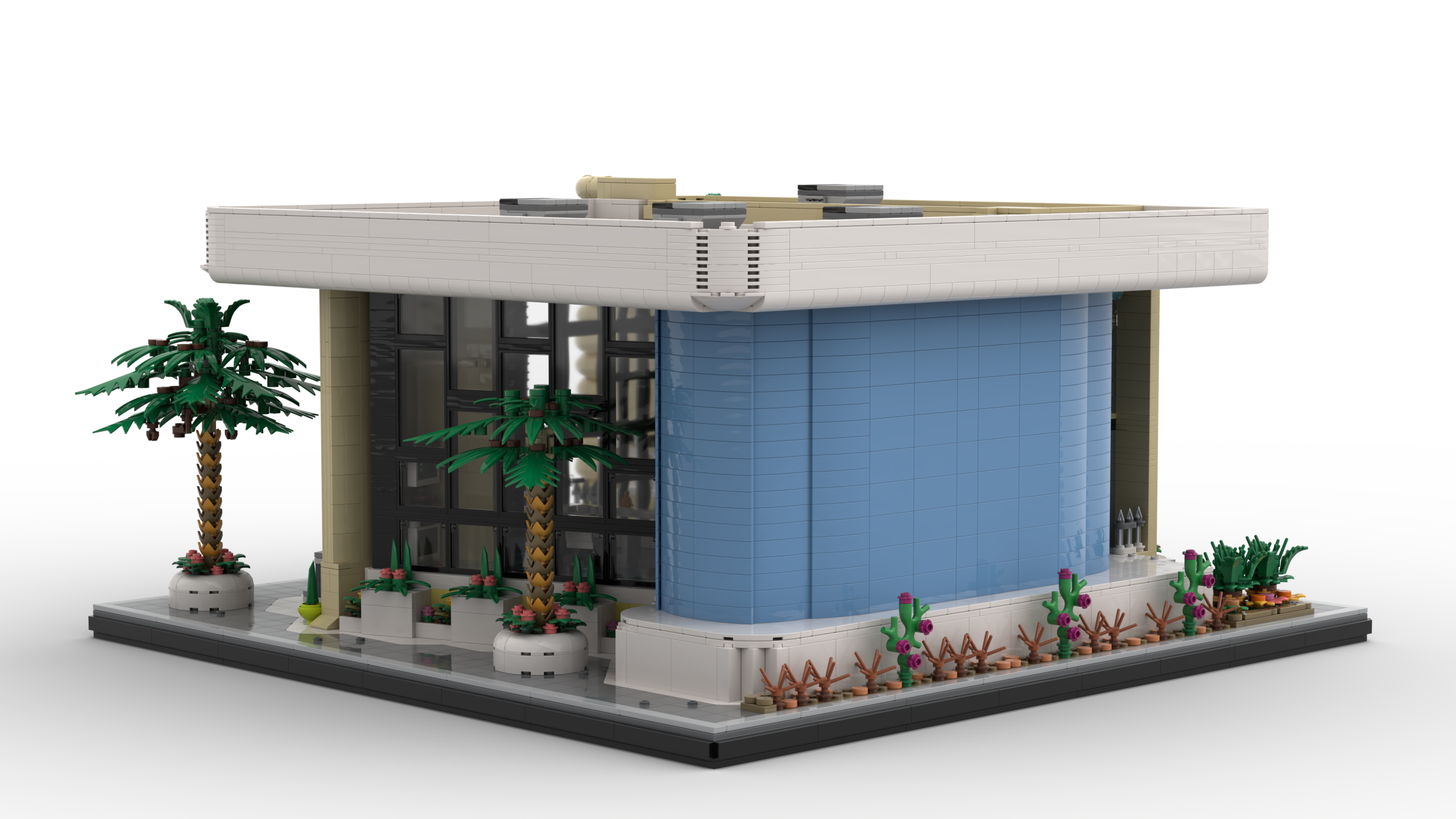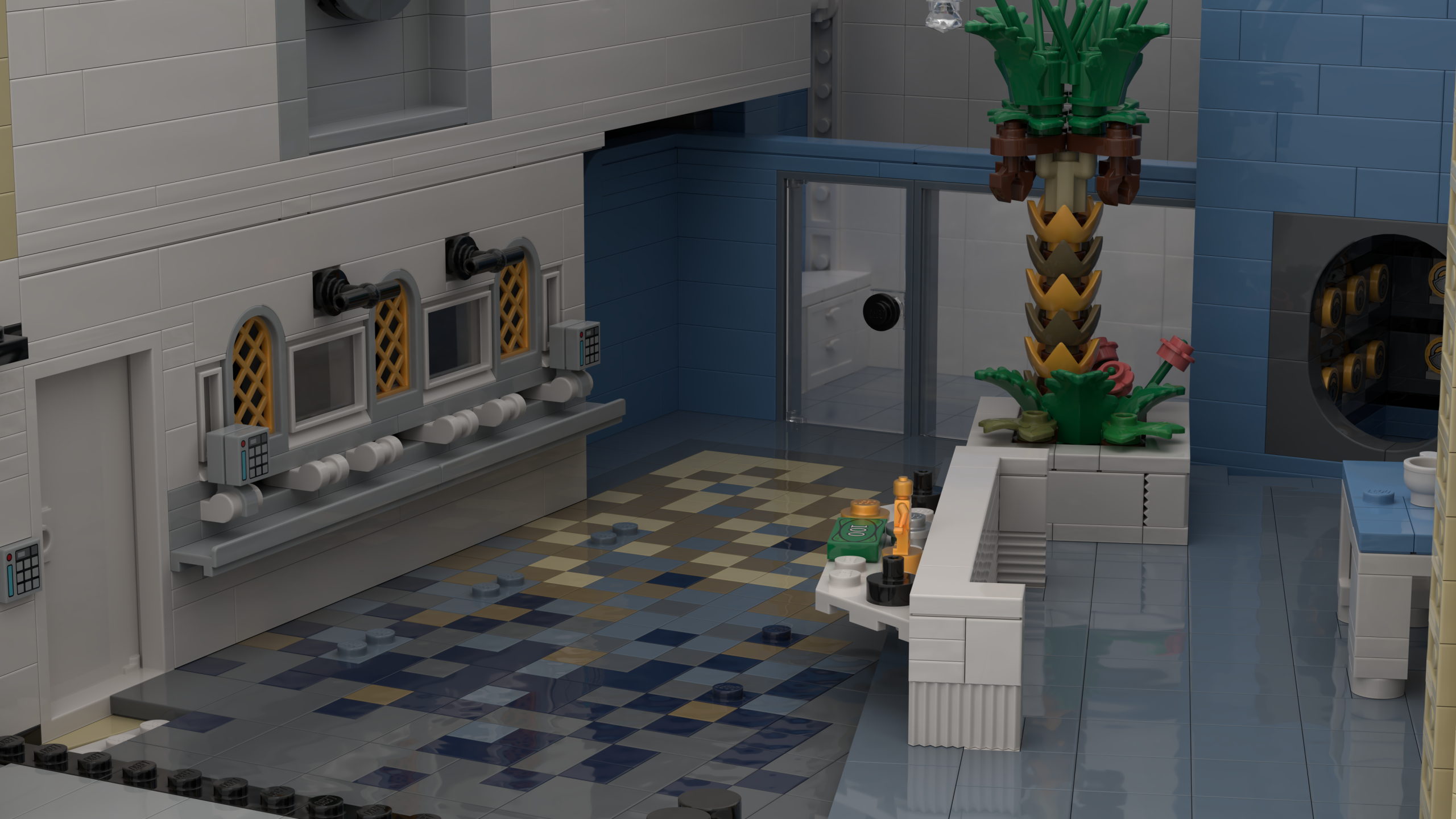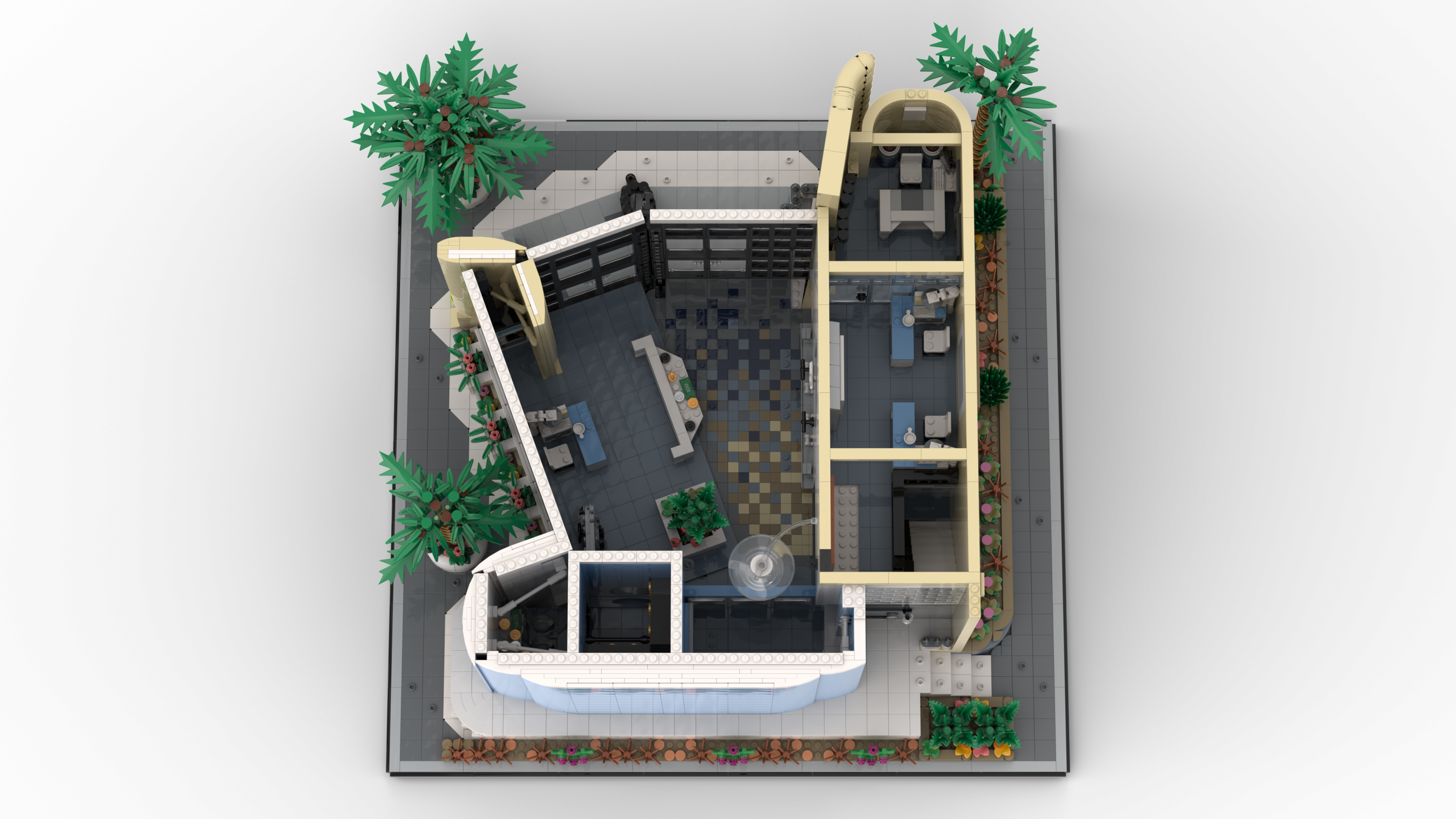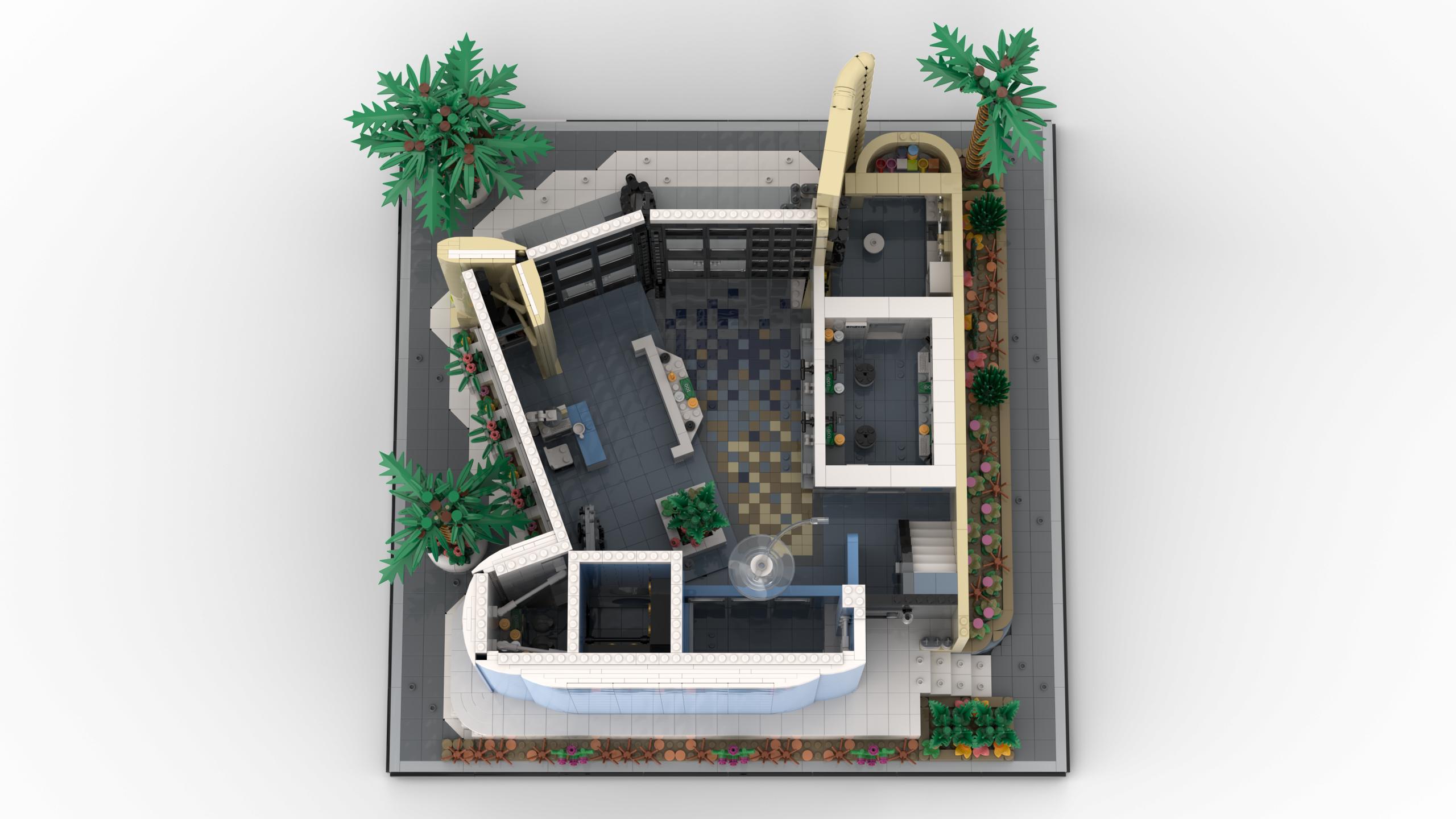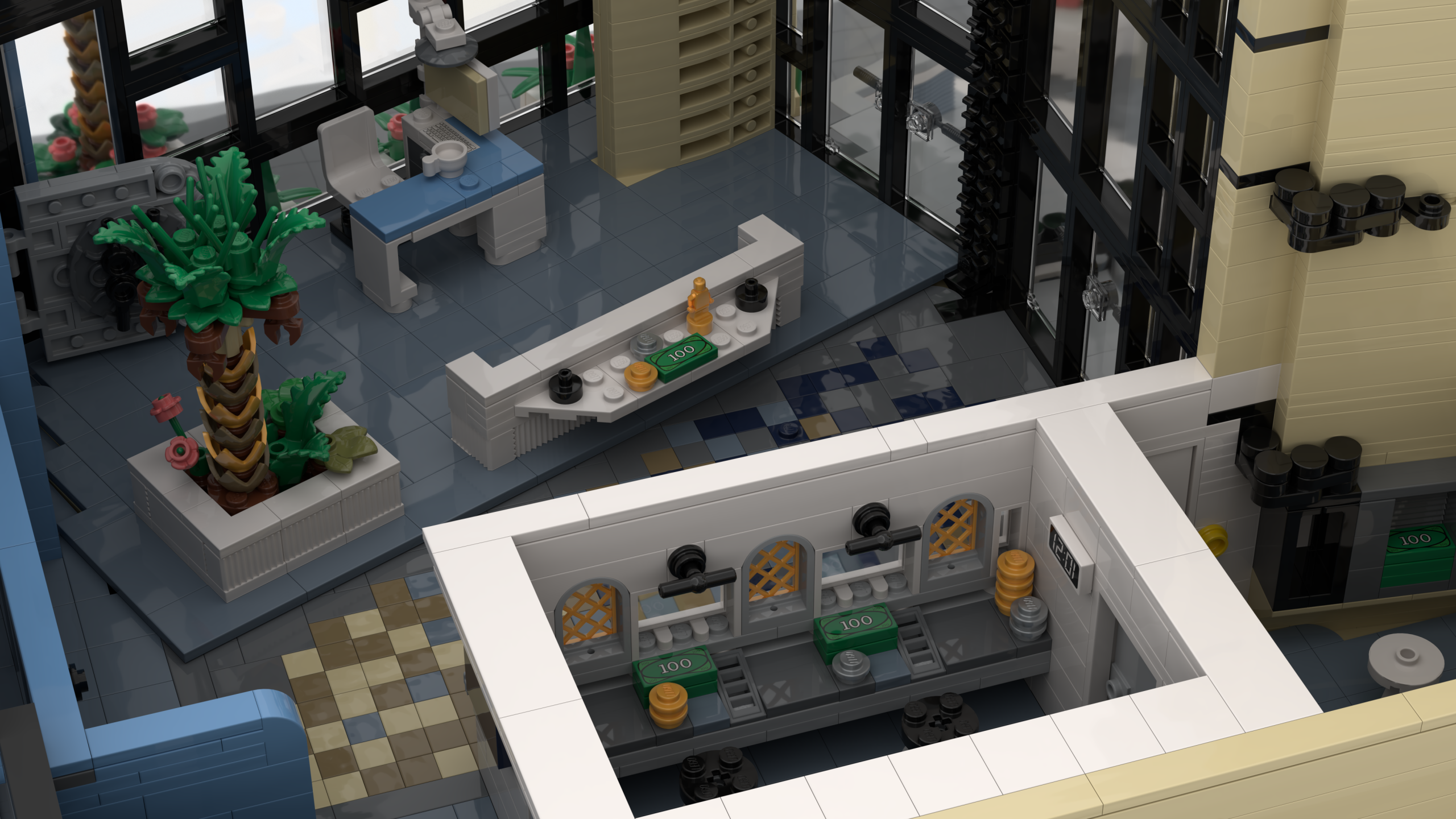
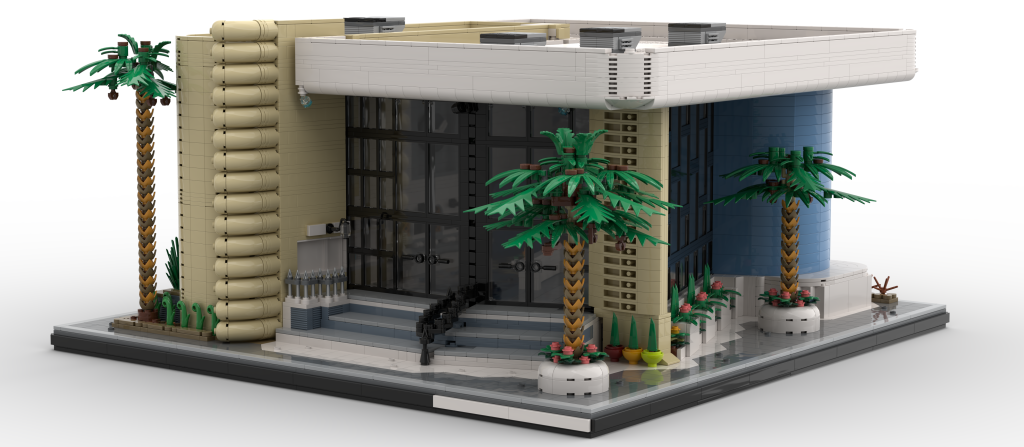
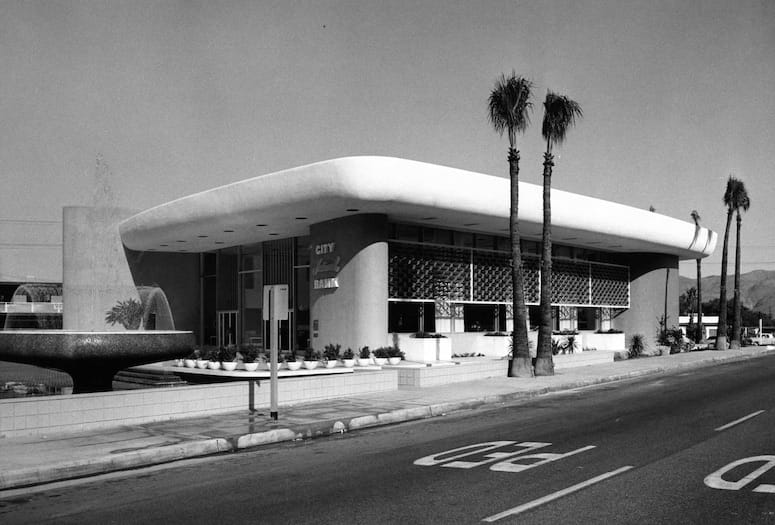
The former City National Bank building in downtown Palm Springs stands as a notable example of the city’s embrace of mid-century modern civic and commercial architecture. Constructed in 1960, the building was designed to project confidence, permanence, and modernity at a time when Palm Springs was rapidly transforming from a resort town into a year-round business and cultural center. Today, the structure continues its financial legacy as a Bank of America branch, maintaining its original purpose more than six decades later.
Architecturally, the building is defined by clean horizontal lines, strong geometric massing, and climate-responsive features typical of Desert Modernism. A prominent brise-soleil and deep overhangs help mitigate harsh desert sunlight while giving the façade a sculptural quality. The use of concrete, glass, and steel emphasized durability and modern construction methods, while large windows reinforced transparency – an intentional symbolic gesture for a financial institution. The building’s restrained elegance allowed it to feel both progressive and approachable, aligning with Palm Springs’ broader modernist identity.
The project was designed by Victor Gruen, a highly influential architect and urban designer best known for shaping postwar commercial architecture in the United States. Gruen’s work frequently balanced bold modern forms with human-scaled functionality, and his Palm Springs bank commission reflects that philosophy. Rather than monumental classicism, Gruen favored clarity, shading strategies, and logical circulation – principles that made his buildings well suited to both commerce and climate.
In recent years, the building underwent a careful restoration that respected its original design intent while updating systems and materials to modern standards. The work reinforced the structure’s architectural significance without altering its defining features, allowing it to continue serving the community as both a functional bank and a preserved piece of Palm Springs’ architectural heritage. Today, the former City National Bank building remains a quiet but confident landmark.
[Image Carousel – click image to view zoom]